Friday, February 3, 2023

Adventure in Paradise, Bradenton, Anna Maria Island and Longboat Key, Florida

            There is no best time to visit the Bradenton, the barrier islands Anna Maria Island and Longboat Key, but the month of February allows you to take full advantage of the romantic aura that surrounds the region. Like pearls strung out along the Gulf Coast, 15-miles in length, it is possible to pick your passion and create your own experience.

            The area is located on the West Coast of Florida midway between Sarasota and Tampa, a brief ride from the Sarasota Airport.  The destination offers a selection of pristine beaches, cultural and artistic offerings, an extraordinary range of culinary venues and accommodations created to fulfill your personal desires.  www.bradentongulfislands.com.


            For thousands of years Native American tribes, most notably the Calusa, Jeaga, Tequesta and Apalachee, inhabited Florida. Hernando De Soto arrived in 1539 and after contact with the Spanish conquistadors their numbers were rapidly depleted by disease, battle and enslavement and removal. Even under these circumstances the Apalachee put up such a fierce fight that the Spanish were not eager to settle there for more than a century. 

            In 1842 brothers Dr. Joseph and Hector Braden left plantations they owned in North Florida and moved to the Manatee River area to start anew. Hector drowned in 1846 but Joseph persevered, developed a sugar plantation and erected the Braden Sugarmill and a log home/stockade known as Braden’s Castle. The 2-story structure had 20-inch thick walls and each outer wall was 100-feet long.  The castle had 4-rooms, all 20-ft. square, on each of the floors. The building’s remains stand at First Baptist Church of Bradenton’s playground. #BradentonArea

In the 1870s an official name was required for the Manatee River area to qualify for a post office and become a town. The residents voted for Bradentown in honor of Hector Braden. In the 1900s the “I” and the “w” were dropped and the town was officially named Bradenton.
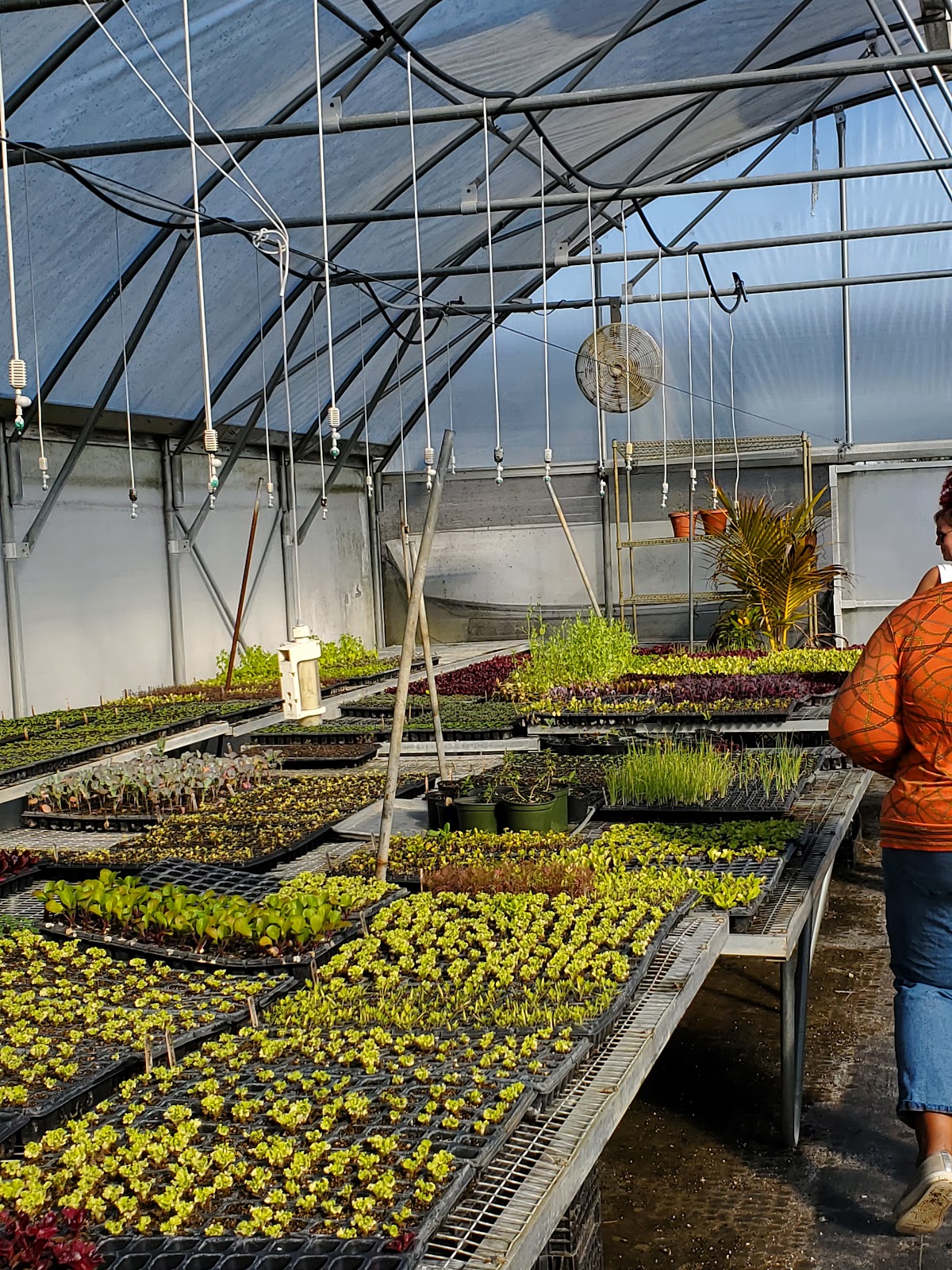


One of the outstanding ways to immerse yourself in the area is through the culinary options that are both specific to the area and incorporate cutting edge techniques and sustainability. Begin with a tour of Gamble Creek Farms and  Farmer’s Market. This 26-acre working farm is on organic-certified land and merges scientific techniques to produce locally grown and ethically raised meats and seafood. Gamble Creek supplies area restaurants daily and supports charitable entities in the region. Gamblecreekfarms.com

             Your gill to grill culinary tour should continue with a guided boat tour with 

Oysters Rock Hospitality. The goal of the tour is to familiarize visitors with oyster restoration programs designed to bring back the oyster population to improve water quality. One oyster can clean up to 50 gallons of seawater daily. In the past 200-years nearly 90% of all oyster reefs have disappeared. 


            Anna Maria Island is 7-miles long and is connected to mainland Bradenton by two drawbridges and to Longboat Key by road. The earliest nonnatives, Spanish explorers, appeared in the 1530s. One story of the naming of the island tells us that the explorers called it Ana-Maria Cay in tribute to the Virgin Mary and Anne her mother.

            A leisurely amble down colorful Pine Avenue, the greenest street in America, will give you a real feel for the island and allow you to engage in some serious retail therapy. Pine Avenue is a certified Green Village with native landscaping, community gardens and a unique selection of shops, boutiques and restaurants.

            Anna Maria Island Historical Society Museum consists of three structures, the museum, old city jail and Belle Haven cottage. The museum building dates from 1920 and outlines the island’s history from its prehistoric past onward. The 1927 old city jail was the only jail ever constructed on the island and there was only one documented prisoner.

            Historic Cortez Village, with 97 buildings on the National Register of Historic Places, preserves Florida Gulf Coast Heritage. Originally it was known as Hunter’s Point and in 1880 five fishermen and their families arrived from North Carolina and established homes. 

The Florida Maritime Museum’s exhibits detail the area and the state’s maritime culture and history through dioramas, models and text. A highlight is the exhibited Cortez fisherman Capt. Blake Banks seashell collection. The museum’s Folk School presents public programs that emphasize the teaching of heritage crafts and skills. The museum is situated inside a 1912 schoolhouse. @FloridaMaritimeMuseum


One of the most interesting classes they offer is Painting with a Fish, modeled after the Japanese art of Gyotaku. Pre-photography rubbings were taken by fishermen to document the number and type of their catch. It was believed the print brought good luck. @PaintingWithaFish


Anyone with a desire for a complete dining experience including excellent cuisine, ambiance and sensational views should seek to continue the SW Gulf Coast experience by dining in any, or all, of the listed restaurants.

Beach Bistro is an award-winning restaurant nestled on the white sands of the Gulf. It has been awarded the highest Zagat ratings in the country. Their most renowned dishes are seafood, lamb and prime rib. Add great sunsets for true awesomeness. @beachbistro

            Sit on the climate-controlled outdoor deck, enjoy the view and dine locally sourced and fresh dishes at the Beach House Restaurant. This waterfront restaurant takes pride in its bountiful menu and exemplary service. The Anna Maria Bake House is located inside the restaurant and creates from scratch all of the baked goods offered to diners using only the highest quality ingredients. @TheBeachHouseAMI, @thebakehouseami


Tide Tables is so named to honor the connection between the rhythm of the tides and the culture of the waterman. All of the seafood is fresh and cleaned on the dock of the restaurant. Their most requested dish is the fish taco. Seating is available both indoors and on the patio. @tidetables

Anna Maria Oyster Bar was founded on the Anna Maria City Pier in 1996, and the City Pier will always be home. It is notable for the fresh seafood, extensive menu and casual, welcoming, atmosphere. @annamariaoysterbar


            Seaside at Anna Maria Island Inn offers the newest upscale accommodations on Anna Maria Island. It is also the only hotel located directly on the beachfront. Guests can step from their glass doors onto the deck leading to the white sand beach, a few feet from the turquoise waters of the Gulf. Each room is artfully decorated and features deluxe linens and bath amenities. The sunset views from your resort room are incomparable. @annamariaisland.inn

            Pick you passion in paradise.           


Wednesday, December 21, 2022


Sedalia, "Queen City of the Prairies"


“That ain't any other town, that's Sedalia.” – Rowdy Yates in Rawhide

                  Long before Rowdy Yates and the other cowhands in Rawhide declared its uniqueness Sedalia’s history was firmly entrenched in western lore. Native Americans lived there for thousands of years and French explorers documented the Missouri Tribe, people of the dugout canoes, in 1673. French missionaries followed the explorers but failed to establish permanent settlements in the region. In the 1800s many other tribes crossed the state on forced marches to Indian Territory. www.visitsedaliamo.com


                  General George Smith and his father-in-law migrated from Kentucky, bringing along their families and 60 slaves in the 1830s. Ultimately Smith purchased acres of land adjacent to what he believed would become a railroad line. He recorded his deed in 1857 and called the settlement Sedville after his daughter Sarah’s nickname. The next year he began selling lots for a town that did not exist physically. Smith built a sawmill to make building easier and in October 1860 he and a partner purchased more land and changed the town’s name to Sedalia. The Missouri Pacific Railroad reached Sedalia and the town’s fortune was solidified. 


                  We do not know why it is known as the Shawnee Trail, it was possibly named after the Native American tribe that lived along its route in Texas, but we do know that it predates the presence of Europeans. It had been used as a hunting and trading path. When Europeans began to follow it they called it variously, The Texas Road, The Cattle Trail and The Sedalia Trail. It was the first and easternmost trail used to herd cattle to Midwest hubs for shipment to eastern slaughterhouses. Sedalia, because it was the railroad terminus, became a cattle town complete with stockyards and allied businesses. In 1866 alone more than 250,000 cattle passed through the stockyards in Sedalia.


                  The Romanesque Revival Katy Railroad Depot was listed on the National Register of Historic Places since 1979. It was constructed as a 2-story, limestone, station in 1896 for $35,000. The current renovated structure houses a railroad museum, Convention and Visitors Center and Depot Store. Additional galleries present all aspects of Sedalia’s history from its founding onward. The Railroad Museum features memorabilia and a waiting room with authentic furniture and flooring. The Depot Store carries a complete range of souvenirs, handicrafts, railroad objects and bike trail paraphernalia. Guided tours are offered if prearranged.

Katy Trail State Park, a 225-mile route has two trailheads in Sedalia and passes through the state. It affords a great opportunity for outdoor experiences for hikers, bikers, trail riders and lovers of history. The Missouri State Fairgrounds, a National Historic District, is located on the trail at Mile Marker 229. The Missouri State Fairgrounds Historic District is a 400-acre area that has hosted the 3rd largest US fairgrounds since 1899. www.bikekatytrail.com


Showcasing Sedalia’s place as a site on the prairie that was the terminus for Texas cattle drives and the railroad is the Trail’s End Monument at the entrance to the fairgrounds. The sculptural diorama consists of full-sized replicas of a water tower, windmill, five longhorn cows, 1860s locomotive and a mounted cowboy. At the site there is interpretive information.

On the heritage tour architectural routes through the city feature extraordinary examples of Queen Anne, Romanesque Revival, Craftsman, Classical Revival, Italianate and Prairie-Style structures. The 1895 Harris House is listed on the National Register of Historic Places. The 3-story mansion features a two-story tower and porte-cochère. 

 Bothwell Lodge State Historic Site is situated atop two natural caves. The 31-room lodge was built for John Bothwell, a lawyer. Throughout the 12,000-square-foot lodge visitors can view the furnishings, the majority of which are original to the lodge. On the exterior there is an accessible 3-mile hiking and biking trail. The lodge is 6-miles north of Sedalia. 

                  Scott Joplin was born in 1868 in Linden, Texas to formerly enslaved parents. Both of his parents were musical, his father played the violin and his mother the banjo, and at an early age he played both. Around the age of seven he began to play the piano at the home of his mother’s employer. Four years later a German-born music teacher, Julius Weiss, took him on as a free student. Weiss is credited with instilling in him a love and appreciation for classical music and opera.


                  At the age of 19 Joplin left Texas to become an itinerant musician and spent much of his time playing in brothels and bars because the larger culture was not very receptive to his forms of music. He settled in Sedalia in 1894, earned income as a piano teacher and attended the George R. Smith College, established by the Freedman’s Bureau. There he was trained in music theory and notation.


                  In Sedalia he played at the Maple Leaf Club and it is there he had printed on his business cards “The Entertainer,” a name by which he became known. His popularity grew there and in 1899 a local music publisher published Maple Leaf Rag leading to national fame and the selling of more than a million copies. Following the death of his second wife he left Sedalia, never to return. At the age of 40 he died on April 1, 1917 in Manhattan Psychiatric Center in New York.


                  Joplin’s influence on music cannot be overstated. He wrote in many genres of music, concertos, symphonies, operas, marches, waltzes and ragtime, and often defied the color line. He was inducted into the Songwriters Hall of Fame 1970 and was awarded the Pulitzer Prize in 1976. The Scott Joplin International Ragtime Festival is held each June.

                  Sedalia’s Scott Joplin Tour has 24 locations including Maple Leaf Park. The park is situated on the site of the original Maple Leaf Club. A focal point of the tour is a large mural of Joplin playing the piano.


                  Jefferson City is 60-miles from Sedalia but it is well worth the detour to visit one of the most haunted places in the country. Jefferson Penitentiary, the oldest penitentiary west of the Mississippi River sits on 47-acres. It was built in 1836 with enclosing limestone walls and 15 towers. General tours include several cellblocks, solitary and the execution area. Hall A, the oldest section, is considered especially haunted. Ghost tours are as long as five hours and have been featured on national television. Reservations are strongly recommended.


                  Infamous inmates include Pretty Boy Floyd, Blanche Barrow of Bonnie and Clyde renown and Charles “Sonny” Liston who learned to box there. James Earl Ray was incarcerated in the penitentiary until his escape in 1967. While an escapee he assassinated M. L. King, Jr. in Memphis. 


                  Should you escape from the pen hurry around the corner to Prison Brews Restaurant and continue the experience. The décor is prison-chic and the menu is filled with a wide-variety of delicious pub foods. The building dates from 1895 and was transformed into Prison Brews in 2008. 


Road Reads:

Rawhide was based on George C. Duffield’s diary detailing the trials and tribulations of his 1866 cattle drive to Sedalia. Duffield was the sole trail rider to write a diary and as a distinctive document it was published in 1924.

Tuesday, December 13, 2022

The Jesse James Trail

“You can run on for a long time. Sooner or later they’ll cut you down.” Traditional Gospel Song

                  The whereabouts of Jesse James may have been mysterious in the latter part of the 1880s but scholars have successfully traced his movements from birth through his burials and exhumations. Across the country, from Texas to West Virginia, there are explorable sites and markers that refer to his domestic and his criminal lives. He joined the Civil War guerrillas in 1864 and Post-Civil War he and his brother Frank formed an alliance with the four Younger Brothers and became the James-Younger Gang to continue the fight. James is estimated to have participated in approximately twenty armed robberies. www.visitmo.com

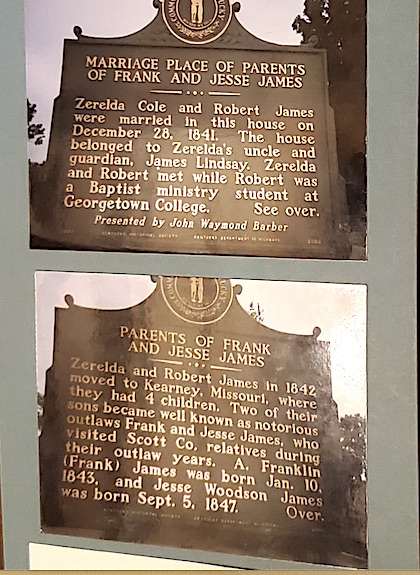
                  His legend began in Kearney, Missouri on September 5, 1847 on the 100-acre family farm. Originally a 2-room log cabin, the house was built circa 1822 by Jacob Groomer and purchased in the 1840s by Jesse’s father Robert S. James. He added a wooden building with 3-rooms in 1845. Robert, a Baptist minister, married Zerelda Cole and settled in the “Little Dixie” region of Missouri to become hemp farmers and owners of six slaves. Frank was the elder son. Robert died in 1850 of cholera. 


                  Zerelda’s second husband, Benjamin Simms, also passed away and she married Dr. Reuben Samuel in 1855. On September 15, 1868 Perry Samuel was born. He was the son of the enslaved housekeeper in the James’ home and, historians believe, Dr. Samuel. 


Perry is listed in the 1880 census records as a mulatto and a servant. He is included in family photographs, lived inside the farmhouse and not in a slave cabin or servant’s quarters and some family members referred to him as Uncle Perry. Upon Perry’s death his obituary lists him as an “aide” to the James Boys. He is interred in Fairview Cemetery in Liberty, MO.


Tours of The Jesse James Farm and Museum begin in the Visitor Center with a film and series of outstanding thematic displays that feature family artifacts, memorabilia, photographs and explanatory text on all aspects of Jesse’s life. Exhibited highlights are the boots he was wearing when he was killed, his saddle, Frank’s 1882 surrender letter to the governor and other personal items that comprise the largest collection of Jesse James objects in the world. One intriguing area is devoted to depictions of the outlaw in films. Movie aficionados will be thrilled to learn that “The Assassination of Jesse James by the Coward Robert Ford” is the most accurate of all the autobiographical films. Jessejamesmuseum.org


A short walk from the museum is a complex of sites that includes the James birthplace, slave quarters, a smokehouse and Jesse’s original gravesite. The house can only be seen from the outside and by peering in the windows. Zerelda had Jesse buried in the yard of her home so that she could keep the grave from being vandalized. A steady stream of people would visit the grave and she would sell them a stone taken from it for $.25. Each evening she would replenish the stones. When she died she left the house to Frank who continued to live there until his death in 1915. His wife lived there until her death in 1944. #visitkearneymo


The arrival of the Federal militia at the James’ farm was a turning point in Jesse’s life. In May of 1863 they rode in to question the family about Confederate guerrillas active in the region because they were aware of the family’s links with and sympathies for the bushwhackers. When they gave no information Jesse was severely horsewhipped and his stepfather was repeatedly hung from a tree. Soon after, 16-year-old Jesse left home to join his brother in William “Bloody Bill” Anderson’s guerrilla band.

Losing the war left Jesse angry and poor but with ruthlessness and a criminal skill set to fall back on. On February 13, 1866 he and the James Gang rode into Liberty, MO and committed the first successful, peacetime, daylight robbery. Only the banker and his son were there as Frank went inside the bank while Jesse kept a lookout on the exterior. They netted $58,000 ($1,085,990 in 2022). As they made their escape they killed a college student, the only murder victim. The men managed to evade the posse and ferry back across the river.

Jesse James Bank Museum in Liberty remains arrested in time. It is outfitted as it was on that day in 1866. The period décor includes a Seth Thomas clock set for the exact date and time the one-room bank was robbed. The original green bank vault is also on displayed along with documents, photographs and objects of Americana. The museum store is stocked with items that make great souvenirs and keepsakes. The bank never recovered from the theft and had to close. #visitlibertymo


James is documented to have robbed at least seven railroads, twelve banks, five stagecoaches and the Kansas City Exposition. There is no authentication of Jesse James ever having been a Robin Hood figure. He robbed and murdered for personal gain and as the war retreated into memory citizens grew weary of his lawlessness. 

In 1873, in Iowa, he committed the first robbery of a moving train, holding up the passengers when the vault held only $2000 ($45,500 in 2022). The railroads hired the Pinkerton National Detective Agency to hunt down the gang and stop the train robberies. On January 26, 1875 a posse of Pinkertons rode onto the family farm. The men hurled a flaming item into the cabin through a window and someone inside pushed it into the fireplace where it exploded. The blast killed 8-year-old Archie James, a half-brother, and damaged Zerelda’s right hand causing an amputation.

Northfield, Minnesota was 400-miles from Jesse’s home but he felt that robbing a bank there would prove lucrative. It did not. On September 7, 1876 the Northfield Raid resulted in the capture of the Younger Brothers and their subsequent life sentences in prison. Frank and Jesse escaped. The First National Bank of Northfield is now a museum.


Jesse, without Frank, started a new gang in 1879 but it fell apart after he killed one of its members. Tom Howard and his family rented a small house in St. Joseph, Missouri on December 24, 1881. Using this alias he lived there until he was shot and killed by Robert Ford on April 3, 1882. Ford wanted to collect the governor’s $10,000 reward. The home still stands and displays the bullet hole left in the wall. #stjomo


Jesse James funeral service was held at First Baptist Church in Kearney, Missouri on April 6, 1882. He was buried in the front yard of the family farm and a large monument was placed on his grave. It expresses his mother’s sentiments on the murder.


His wife died in 1900 and was buried Mt. Olivet Cemetery in Kearney. In 1902 his mother no longer lived on the farm and could no longer watch over him and the decision was made to move his body to Mt. Olivet beside his wife. Frank, because he was wanted, could not attend the first burial. He did attend the second. The cemetery is open for respectful visitors.


                                     "We are not thieves, we are bold robbers.”  From a Letter by Jesse James

Monday, December 12, 2022

Experience the Vibe in St. Jo, MO

            Missouri is nicknamed the “Show Me State” and true to the state’s name St. Joseph’s, MO is showing us the history of westward expansion through the preservation of authentic sites, cultural attractions and oral histories. French explorers and traders are documented as being in the region in the 1700s. Joseph Robidoux III was born 1783 and lived in St. Louis until the mid-1790s when he joined a group of fur traders sailing up the Missouri River to the area now St. Joseph’s. He established several trading posts until 1826 when the American Fur Company issued a non-compete clause and bought him out. 


In 1826 he was hired to erect a post in the Blacksnake Hills, now St. Joseph. His business thrived, employing a group of Frenchmen and trading with Indians settled in the vicinity on ground considered sacred and conflict free. Robidoux platted the town in 1843 and began selling plots of land. It quickly became a hub for settlers rest and restock. When gold was discovered in California in 1848 travelers came from everywhere to the port town to cross the river and continue their journey. 


Constructed in the 1840s-50s the city’s oldest building and historic apartment building west of the Mississippi was built by Joseph Robidoux. The 1½ story, seven brick apartment building, was originally home to families who were waiting construction of their homes on purchased lots. Later the apartments were rented to individuals waiting to cross the river who were beset by bad weather or other conditions. There were several communal outdoor privies and individual stoves for heating. In 1868 Robidoux passed away in his private apartment. 


            The restored building functions as a museum and the Saint Joseph Historical Society. Exhibits in the museum depict how the rooms would have been furnished originally. Other galleries display artifacts and memorabilia from Joseph Robidoux, the early history of St. Joseph, the fur trade and westward expansion. Tours are self-guided.


            In 1859 Robidoux drove the final spike into the western rail terminus in the city. This combination of rail and river appealed to the founders of the legendary Pony Express and on April 3, 1860 twice weekly service began from St. Joseph to Sacramento, California. The company had 400 horses and 200 riders, the youngest being 11years old. Riders carried 20-pounds of mail and were equipped with lightweight saddles and a mochilla in which to carry the mail over the 10-day route. Relay stations, to exchange horses, were placed every 10-15 miles and home stations every 100-miles. The Pony Express functioned only from April 1860 until October 1861.


            The Pony Express Museum is a phenomenal immersion into the world of express riding. Moment in Time is a life-sized diorama that depicts the inaugural ride of the Pony Express on April 4, 1860 at 7:15 pm from the stable that now houses the museum. Exhibits interpret the history of the institution, the riders and the topography over which they rode. Two other featured exhibits are a fully outfitted settlers wagon and a photo gallery of the riders. Tours are self-guided or docent led. Stop in the gift shop for great souvenirs. Annually the National Pony Express Association hosts a commemorative ride on the historic route. More than 750 riders participate.


            Patee House opened in 1858 as a 4-story, 140-room luxury hotel. From 1860-61 it was the Pony Express headquarters. In 1865 John Patee was forced to sell by lottery. He purchased 100 tickets and won it back. In 1888 it was renamed the World Hotel and Jesse James’ wife stayed there for 2 days after his murder and the investigation of his death was held there. It is a National Historic Landmark and huge museum. Each thematic gallery is like a time capsule filled with portraits, documents and artifacts. Highlights of a visit are Portraits of the Old West, a vintage carousel, an Overland Stage, a replica street and a piece of rope from a lynching. Dedicate several hours to visit this museum listed as one of the Top Ten Western Museums in the country. ponyexpressjessejames.com


            Attached by a short walkway is the Jesse James Home Museum, the site of his death on April 3, 1882. While straightening a picture on the wall he was shot from the rear in the head by Robert Ford. The restored single-story home was relocated here, two blocks from its original site, for greater access. It is decorated with original and period furnishings. The home is 24-ft by 30-ft. and consists of four rooms. On display are photographs, personal items and objects obtained during his exhumation in the 1990s. The showpiece of the museum is the bullet hole in the sitting room wall. An orientation is given as you enter for a self-guided tour.


St. Joseph Museum complex containing Glore Psychiatric Museum, Black Archives Museum, Doll Museum and Native American and History Galleries, is situated inside the 1879 Victorian Wyeth-Toole Mansion. stjosephmuseum.org

In 1968 the estate of Orrel Andrews purchased five dolls and in 2011 the 1,600- piece collection of dolls, dollhouses and toys became part of St. Joseph Museums, Inc. The collection relates cultural, historic, ethnic, gender and leisure time history.

State Lunatic Asylum No. 2 began in 1874 with 250 patients. One hundred-four years after employee George Glore created exhibits about treatment of the mentally ill beginning in the 17th-century the Glore Psychiatric Museum was founded. Currently the museum is recognized as “one of the 50 most unusual museums in the country” and has been featured on several channels including PBS and Discovery. Displays include surgical treatments, patient artwork and unique cases.

Henry George gathered one of the largest and most impressive collections of American Indian objects in the region. It consists of 4,000 items dating from pre-European contact and is heavily focused on basketry.


Established as the Knea-Von Black Archives Jewell Robinson founded the Black Archives Museum in 1991. In 2002 it became a member of the St. Joseph Museums, inc. The museum presents the history of St. Joseph’s African American’s beginning with Joseph Robidoux and the French pioneers. An authenticated letter has been located of correspondence between Robidoux and pirate and slave trader John Lafitte in which Robidoux asks to purchase 5 nursing babies and 20 French-speaking mulatto slaves. Exhibits progress through the Civil War, Civil Rights, Desegregation and Music. A signature exhibit is on the 40-year career of Coleman Hawkins, the Father of the Tenor Sax. An 8-ft. statue of Hawkins stands on a 3-ft. pedestal in Coleman Hawkins Park. Coleman Hawkins Jazz Festival is held annually in June in the park. 


            Newsman Walter Cronkite was born in 1906 in St. Joseph. Cronkite was America’s premiere journalist and CBS Evening News anchor for 19 years. The Walter Cronkite Memorial is located on the campus of Missouri Western State University in Spratt Hall Atrium. Highlights of the memorial are a timeline of Cronkite’s life, photographs, caricatures and a video monitor with clips of historic broadcasts.  Visitors can experience the excitement of being in a CBS newsroom in a replicated studio.


            The best surviving extant set of late-nineteenth-century warehouse and commercial structures in the state are a designated historic district known as Wholesale Row. The area once housed 170 factories because of its access to rivers, rails and roads. Located inside one of these rehabilitated red brick High Victorian Italianate structures is Boudreaux’s Louisiana Seafood & Steaks. The 2-ton bar is a showpiece built in Philadelphia circa 1870, disassembled and brought west in 1871. The menu is sizeable and filled with culinary, Cajun, delights. When in St. Joseph this a superior dining option. 

boudreauxstjoe.com


            On the 80th anniversary of the Pony Express the Pony Express Monument was unveiled. The statue captures the exuberance and hopefulness of the era. Take a photo and experience the vibe. stjomo.com