Thursday, May 25, 2023


Cultural Milwaukee, Wisconsin

"That on the first day of January, in the year of our Lord one thousand eight hundred and sixty-three, all persons held as slaves within any State or designated part of a State, the people whereof shall then be in rebellion against the United States, shall be then, thenceforward, and forever free”

President: ABRAHAM LINCOLN


            For thousands of years, at the juncture of the Kinnickinnic, Menomonee and Milwaukee Rivers, Native American tribes lived on the land that is now the city of Milwaukee. The earliest European documentation of the area dates from 1674 when French Jesuit Father Marquette traversed the Great Lakes region following routes he learned of from the inhabitants. Shortly thereafter fur traders entered the area and Milwaukee considers the construction of Jacque Vieau’s trading post in 1795 and its subsequent ownership by his son-in-law, Solomon Juneau, as the founding of the city. In 1822 Juneau built a log cabin and in 1833 he and a partner sold land to newcomers and started a settlement.

            In the 19th-century the city was always involved with abolitionism even though the number of African Americans was small. Generally, the residents were anti-slavery but it must be noted that this did not mean they supported racial inclusion. As independent landowners they were particularly displeased with the Fugitive Slave Act that demanded that all fugitives be returned to their owner with the aid of noninvolved citizens in the vicinity. The people of Wisconsin routinely ignored the law until events called for action. Ultimately one case resulted in the Wisconsin Supreme Court declaring the Fugitive Slave Act unconstitutional and instigated national debate and brought national attention to the state.

            Joshua Glover was born enslaved in St. Louis, Missouri in 1811, escaped slavery and settled in Racine, Wisconsin in 1852. After being betrayed by a friend his former owner recaptured him. He was taken to county jail in Milwaukee by federal marshals. As soon as the abolitionists learned of his imprisonment and intent to return him to slavery, the city mobilized. Word went out and a crowd formed at the jail to give impassioned speeches and generally protest. When this failed a group of more than 6,000 people stormed the jail and escorted Glover to a waiting wagon. He then “rode” on the Underground Railroad. Glover made nine stops on the UGRR, a testament to how large the network was in the area, before boarding a ship to Canada. He died in 1888 in Toronto. A marker can be seen at Cathedral Square Park indicating where the original courthouse and jail once stood on Courthouse Square. His story is noted in a mural at Fond Du Lac Avenue and the I-43 underpass. 

            Lincoln’s preliminary Emancipation Proclamation was announced on September 22, 1862. It declared that all enslaved individuals (more than 3-million) residing in rebellious states were to be deemed free as of January 1, 1863. The enslaved’s freedom was predicated on the region in which they resided being under Union control and whether the people were informed. In several cases years would pass. It was not until June 19, 1865 that word would reach Galveston, Texas along with Union forces under the command of General Gordon Granger. The proclamation was read to the population and this is commemorated as the date upon which the final Confederate enslaved were freed. A jubilee took place immediately following the announcement with singing, dancing and praises.


In Texas on June 19, 1866 the original Juneteenth celebrations were held. Other states began to recognize the day and celebrations became a cultural tradition. In 1980 Juneteenth became a Texas state holiday and in 2021 it became a federal holiday.

Milwaukee hosts one of the oldest, and largest, Juneteenth celebrations in the United States. Since 1971 it has always been held on the 19th of June no matter which day of the week the 19thfalls on. North King Drive is a hub of activity including vendors, eateries, music, entertainment, floats, bands and a parade. The event brings together more than 100,000 people and blends cultural pride with social consciousness and educational opportunities. This year’s Juneteenth celebration is the 52nd.


One of the premiere Juneteenth participating organizations is the Brew City Cowboys (BCC). Their roots stretch back to the Civil War era when Black cowboys made up 25% of the Wisconsin cattle industry and were some of the states’ first cowboys.  The industry was at its peak from 1867-1880 and formerly enslaved men migrated to these jobs. The BCC grew out of the Silverado Trail Riders in 2019 with the stated goal, “We ride for the kids.” The members engage in community activity and offer riding lessons, horse-care sessions, and they ride in the Juneteenth parade. 

This year’s theme is “I Am Juneteenth.” Plan to travel to Milwaukee for the time of your life.


Monday, May 8, 2023

Northern Alabama, the Soundtrack of Our Lives


“Artists are the gatekeepers of truth.”  Harry Belafonte

            Legend has it that North Alabama’s Muscle Shoals region was named after the Tennessee River shoals that required muscle to navigate. Florence, Muscle Shoals, Sheffield and Tuscumbia made up an area where the river was particularly difficult to navigate. The Yuchi Indians, whose home was along the river, were aware of the unique sound of the water passing over the shoals and referred to it as  “The Singing River” long before European contact. The indigenous people believed a woman sang from the river and her song protected them and their culture.

                  There is something mystical that permeates the region and it would become a music mecca, Hit Recording Capitol of the World and custodian of the cultures of all the groups that interacted there. Today visitors can experience the sites, attractions and history by traveling portions of the 200-mile Singing River Trail. https://singingrivertrail.com


                  The Alabama Music Hall of Fame was established in 1990 to pay homage to Alabama entertainers as well as introduce visitors to the genius and variety of Alabama’s musicians. The hall is a 12,500-ft. complex consisting of a number of galleries, a studio, museum store, bronze stars and portraits of the Hall of Fame inductees. The exhibition galleries feature artist’s clothing, vintage recordings, photographs and memorabilia.   


               A hall highlight is a walk-thru of Alabama’s tour bus. The size of the bus made it necessary to build the museum around it.  There is also a unique set of sculptural works including that of Lionel Ritchie, the only multiple inductee. There is an original copy of Ike Turner’s 1951 Rocket 88, considered the first rock ‘n’ roll recording.  www.alamhof.org     

            “When things go wrong, a man ain't got a friend Without a song!”  Rose and Eliscu 


It was in Florence that the “Father of the Blues”, W.C. Handy, was born. The W. C. Handy House and Museum is a three-part complex consisting of a research center, a museum gallery and the 2-room log cabin built by his father and grandfather soon after Emancipation. The museum showcases Handy’s awards, sheet music, personal items and a horn that belonged to him. Several films are on view to provide an overview of his life and art. 


                  Rick Hall established Florence Alabama Music Enterprise, FAME, in 1959.  With an investment of $500.00 he began with his business over a drugstore. His first hit was Arthur Alexander’s ”You Better Move On” in 1961.  When he became successful he purchased four lots and built FAME Studio. The lots were in a wooded, swampy, area and the second group of studio musicians became known as the Swampers.


                  Many of the greatest artists of the era recorded there. They came because the area was rural, the local population did not make a fuss over them and the production values were outstanding. Among those who made their way there were Percy Sledge, Etta James, Wilson Pickett, Alicia Keys, Alabama, Otis Redding, Kenny Chesney, Billy Ray Cyrus and Aretha Franklin. FAME is recognized as the place where Aretha found her sound. It was there that she recorded “I Never Loved A Man” and “Do Right Woman”.

                  People have toured the studio to see where the magic happened. There are two available experiences, the standard tour and the Backstage Tour. Reservations are recommended. www.famestudios.com

“I’ll Take You There.”  Mavis Staples


In 1969 FAME’s Muscle Shoals Rhythm Section, known as The Swampers, Barry Beckett, Roger Hawkins, David Hood and Jimmy Johnson founded the Muscle Shoals Sound Studio. Their very famous studio was housed in a 1946 coffin showroom. They were the first session musicians to own a studio and later a publishing company. Between 1969 and 1978 they produced records for artists such as Cher, The Rolling Stones, Bob Seger, Duane Allman, Joe Cocker and Mavis Staples. The studio, 3614 Jackson Highway, was placed on the National Register of Historic Places in 2006.

In 2013 a documentary film, Muscle Shoals, prompted interest in restoring the studio. With a crucial $1-million grant from Beats Electronics the studio reopened for tours in 2017. The restoration is as close as possible to the original and includes isolation booths, the control room, instruments and replicated orange carpet. A highlight of the tour is a peek into a secret room used by the artists. https://muscleshoalssoundstudio.org


               Rattlesnake Saloon is one of the most unique restaurants in the country. The thrill begins when you arrive as guests and are driven from the parking lot and down a circuitous path to a sheltered area beneath a rock outcrop. The cave was once the home of Native Americans and subsequently used to house hogs by subsequent owners. The saloon accommodates both indoor and outdoor dining.


“They are not dead who live in the hearts they leave behind.” – Tuscarora

Tuscumbia was founded seven years before statehood on the site of a former Chickasaw village. A group of settlers escaping an Indian attack were given assistance by Indian Chief Taskaambi for whom they named the town. Tuscumbia’s historic district, 22 structures, was the first in North Alabama to be listed on the National Historic Register. https://cityoftuscumbia.org

On November 30, 1827, as the Cherokee passed through Tuscumbia on the Trail of Tears, the Tuscumbians gave them food and warm clothing. Chief Chilly McIntosh declared at the time, “As long as our nation remains upon this earth we will recollect Tuscumbia.” A tree statue of the chief stands in Tuscumbia Spring Park. Also in the park stands “Sacred Tears”, an 8-ft., 1-ton, monumental sculpture of a native woman with a baby in one arm and a hand resting on a cross, representing all those who perished on the trail.

                  Sacred Way Sanctuary, the country’s largest horse rescue facility, emphasizes research and education. Native Americans have occupied this land for at least 10,000 years and, after contact with Europeans, in 1806 this area became the first Federal Indian Reservation. Visits include a museum that interprets the history of Native American horses and their cultural importance. Tours are limited and calling ahead is advised. www.sacredwaysanctuary.org

“ All things shall pass. Only the stones will remain.”


The Wichahpi Commemorative Stone Wall, more familiarly known as Tom’s Wall, is comprised of 10-million unmortared stones. Tom Hendrix carried each stone individually over a period of more than 30-years until his death in 2017 at 83.


His great-great-grandmother, at approximately 13-years old, was forced to march from Alabama to Oklahoma on the Trail of Tears. Once in Oklahoma she realized that there was no music there. The rivers did not sing. At the end of a year Te-lah-nay set out to reclaim the mystical music. She walked alone for five years. Tom honored her journey with the longest memorial to a woman or a Native American. If laid out in a line the wall would be 2.50 miles long with a 4 level prayer circle. The wall is circuitous because, though the walk to Indian Territory was straight, the walk home was fraught with danger and was not linear. There is no admission and people from all over the world have visited the site. ifthelegendsfade.net

Muscle Shoals still has a mystical quality that expresses itself strongly through music and cultural diversity. There is no better place to seek the sound. #sweethomeAlabama


ROAD READS:

                  If the Legends Fade is Tom Hendrix’s narrative about building the wall. Books are available online and at the site.


Uniquely Northern Alabama -One


“We do not inherit the Earth from our Ancestors, we borrow it from our Children.”  

Ancient Indian Proverb


                  By the time Alabama achieved statehood in 1819 the region had thousands of years of history. Archeological evidence proves there had been Native American habitation for greater than 10,000 years. Explorers documented encounters with the Cherokee, Choctaw, Chickasaw, Creek and Alibamos, the state’s namesake. Alonso Alvarez de Pineda’s expedition entered Mobile Bay in 1519 but it was de Soto, in 1540, who was first to traverse the region. When the French established Fort Louis in 1702 the struggle for power among the European powers began in earnest and sixty-one years later the struggle ended with the signing of the Treaty of Paris and the ceding of the territory to England. #sweethomealabama

                  The Florence Indian Mound Museum preserves and presents a landscape of the Woodland Era as well as invites visitors to explore the community’s culture and lifestyle. The museum ‘s galleries interpret this pre-contact settlement through use of gallery exhibits, films, activities and tours of the on-site mound.


                  This earthen mound, the largest of its kind in the Tennessee River Valley is 43-ft. in height with a base that is 310 by 230 feet and was once enclosed by a wall. Archeologists have been excavating the area since 1914 but have been unable to officially determine how the mound was used. One hundred years after the initial excavation the Florence Indian Mound was placed on the National Register of Historic Places (NRHP). www.florencealmuseums.com

                  Records indicate that the French introduced slavery into the area in 1737 with the zealous complicity of the British beginning in 1763. After the American Revolution the region was flooded with Loyalists who brought their slaves with them and by 1861 nearly 50% of the population was comprised of the enslaved.


                  One of the oldest homes in Alabama is located near Tuscumbia. The brick mansion was constructed 1828-32 For Dr. Alexander Mitchell. He planted clover, corn and cotton and enslaved approximately 152 people housed in 13 cabins. The neoclassical Palladian-style plantation house with Jeffersonian architectural elements was listed on the NRHP in 1982 based on its significance both architecturally and historically. 

The mansion and 33-acres were sold to the Winston family who retained ownership until the 1940s. The Winston’s came to Alabama with 50 slaves and by 1863 they owned 300. Tours of the house are offered and a number of the items displayed are original. A visit highlight is the recreated slave quarters in the rear yard. https://ahc.alabama.gov/properties/bellemont

                  In 1896 Oakwood College, so named because of the 65 oak trees on the land, was established as the sole African American Seventh-Day Adventist College in the country. The land upon which the college was built was formerly the Peter Blow plantation where Sam Blow, better known as Dred Scott, was enslaved for 12-years. There is a plaque on campus.


Huntsville’s Weeden House Museum and Garden is a totally unique homage to history, culture and art.  The two-story Federal-style house dates from 1819 and was purchased by the Weeden’s in 1845. It was family owned until 1956. 


                  Maria Howard Weeden was born in the house in 1846. During the Civil War Union officers occupied the house. After the war Maria, under her middle name, supported the family selling her artwork. Maria received national attention as an artist and poet. She painted former slaves and accompanied her extremely detailed portraits with poems in the dialect of the enslaved. The individuals posed in their own attire and her portraits were later used as models for the clothing of the enslaved in Gone With the Wind. Her work is outstanding and becomes even more so when one learns that she was legally blind, placed her canvasses mere inches from her nose and used brushes with only three bristles. Highlights of a guided tour include her desk, numerous artworks and the room in which she was born and died. www.weedenhousemuseum.com

                  The Buffalo Soldiers of the 9th and 10th Cavalry bivouacked for three months from October1898 atop Huntsville’s Cavalry Hill to recuperate from malaria contracted in the Spanish-American War. They were under the command of Lt. Black Jack Pershing. On Cavalry Hill stands the 10th Cavalry Buffalo Soldier's Memorial. Atop a 10-ft. tall granite pedestal Sgt. George Berry is featured astride his horse, ascending San Juan Hill in Cuba, carrying the regimental flag.


Helen Keller was born in 1880 in a home known as Ivy Green, in Tuscumbia, Alabama. Her grandfather built the clapboard house in the 1820s. At the age of 9 months she lost both her vision and hearing. As she grew older her behavior became increasingly uncontrollable and the choice was made to hire a teacher. Anne Sullivan arrived in 1887 taught her to communicate and remained with her as a companion until Anne’s death in 1936. Helen went on to write 11 books, scholarly articles and graduated cum laude from Radcliffe at 20 years of age.


Highlights of the house and grounds’ tour are the water pump where Helen had her first educational breakthrough when she made the connection between the water pouring over her fingers and the letters “w-a-t-e-r” spelled into her hand and the bedroom Helen and Annie shared.  Immediately east of her home is a small cottage where she and Anne lived and Helen was born. More than 85% of the furnishings in the seven-room house are original. A theatrical production of The Miracle Worker is presented each June and July. www.helenkellerbirthplace.org


                  The 118-acre Huntsville Botanical Garden has developed acres of flora, fauna and thematic activity areas including gem mining, an aquatic garden, a spectacular wildflower and nature trail and the largest seasonal butterfly garden in the nation. Galaxy of Lights is the premiere holiday tradition that takes place annually in November and December. The lights may be experienced on foot or by vehicle. The colorful, immersive tradition is not to be missed. www.hsvbg.org


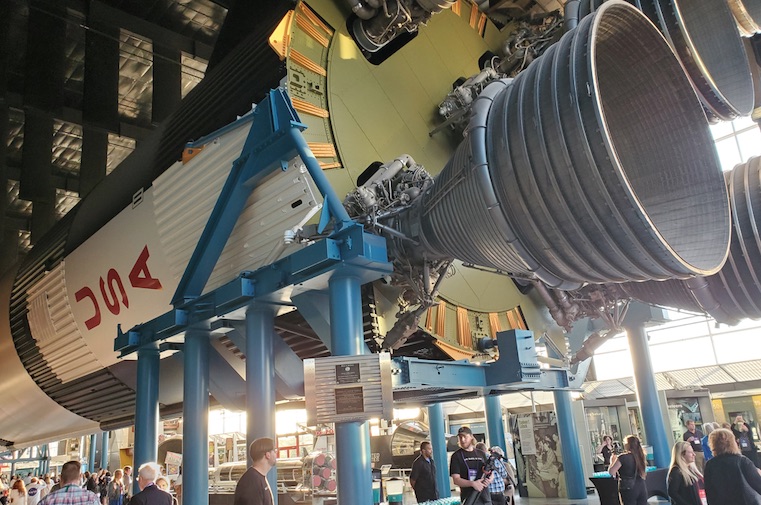
                  The U.S. Space & Rocket Center is a must for any visitor to the region. This is home to NASA's Official Visitor Information Center for Marshall Space Flight Center as well as, Space Camp, Space Camp Robotics and Aviation Challenge. As Huntsville’s signature attraction, Rocket City is intriguing for both children and adults. Displays throughout the museum are immersive and informative and include an impressive number of objects exploring U.S. manned space flight hardware. www.spacecamp.com/museum 

                  North Alabama can be viewed as an experiential tourist mecca based on the sheer number of cultural influences and historic events that shaped it. I invite you to explore all these places that are uniquely Alabama. www.alabama.travel


ROAD READS:

Black Folktales of the Muscle Shoals, by Rickey Butch Walker and Huston Cobb Jr., relates the history of the people of northwest Alabama through use of archival photos, interviews and documents. This holistic approach to the area’s history is well researched and inclusive of all ethnicities and perspectives. BWPublications.com

                  Tananarive Due is an American Book Award-Winning author whose new release, The Wishing Pool and Other Stories, is a compilation of fourteen short Black horror and Afrofuturism stories. These tales are filled with the perfect amount of suspenseful science fiction and are the ideal length for a road trip. #akaschicbooks


Saturday, April 15, 2023


                                 The Most German City, Nuremberg, Germany I and II

                        “To be ignorant of the past is to be forever a child.”  Cicero


Nuremberg, on the Pegnitz River, is located in Bavaria and is southern Germany’s second largest city. It was founded more than 960 years ago, has been at the forefront of Germany’s culture since its establishment and personifies the entire spectrum of Germany’s history. Most significantly it presents a pattern of how to begin to recognize, come to terms with and learn important lessons from one’s history. www.germany.travel/en 

The building, by King Henry III of Bavaria, of Kaiserburg, Nuremberg’s imperial castle, preceded the first official reference to “Nourenberc” in 1050. At that time the city was the eastern frontier of the region and there had been small communities in prehistoric times but the first fully documented settlement surrounded the castle and was chartered in 1219 by Emperor Frederick II as a free imperial city. Although it was not situated on a major water route it was situated at the intersection of several land routes and by the early 1300s it was a free imperial city dependent upon trade and industry. It was considered for more than 450-years the unofficial capital of the Holy Roman Empire of the German Nation some have deemed the First Reich. 

Armor, at that time, was so heavy that if knocked from your horse you were unable to rise without help so many men wore shirts made of wire rings. Each shirt took 18 months to make and was comprised of 40,000 individual rings. The city became famous for making these chain-mail shirts. 

The Nuremberg bratwurst, the city’s iconic food, is first mentioned more than 700 years ago. The sausage was such a diet staple that the city council instituted the “Guten Policy,” guidelines for the making and content of the sausage and those guidelines continue to be adhered to.  There are numerous restaurants and kiosks where visitors can try one. Traditionally, they are between three to five inches long, are grilled over beechwood and six to 12 are served with potato salad or sauerkraut on a pewter plate as pewter was one of the primary metals mined here. Currently an exhibit, “A Cultural History of the Nuremberg Bratwurst” is on display in the City Museum Fembohaus until March 2015. The 1596 Fembo House is the sole surviving large late Renaissance merchant’s house and has been a museum since 1953. www.museen.nuernberg.de/fembohaus

In 1356, the town’s status was assured when the Golden Bull was issued stating that the first parliamentary session held by each new king had to be held in Nuremberg. During the 15th and 16th centuries Nuremberg was a cultural center and art, architecture, philosophy, science and innovation flourished. Ironically, some of the very things that made it a focal point of the German Renaissance would make it ideally suited to become a major city for Hitler’s National Socialist German Workers’ Party (NSDAP/ Nazi Party) and later for the war crime trials.
Nuremberg’s Old Town (Altstadt) walls were constructed to surround it beginning in the 12th-century. Originally they were approximately 4.5-miles with 3-miles and four gates still standing. The Pegnitz River divides the old town into the northern Sebalder Altstadt and the southern Lorenzer Altstadt. If you arrive at the Main Railway Station it is less than one block to the Konigstor, King’s Gate, and Konigstor Street that offers access to the major sites and attractions.

Just inside the gate is the Handwerkerhof, a courtyard with traditional craft stores, cafés and entertainment all replicating a medieval shopping district. This is a great place to purchase authentic souvenirs and memorabilia. The historic Bratwurstglocklein Restaurant is the perfect place to soak up the medieval atmosphere and order a traditional meal prepared and served in the authentic manner. It also presents a wonderful photo opportunity with the walls and tower in the background. www.handwerkerhof.de/de/home

Hotel Victoria is also in the shadow of the gate and it is ideally situated so that a car is not necessary for travel. It was constructed in 1896, underwent a complete renovation this year and represents an expert blending of traditional and modern. All 62 guestrooms provide WIFI, a pillow menu, international television viewing, down bedding and deluxe bath amenities. The entire hotel is nonsmoking and breakfast is offered daily. The staff is exceptional and special packages are available online. www.hotelvictoria.de

The German National Museum was established in 1852 and was heavily bombed during WWII. A new building opened in 1993 and incorporates modern architecture and portions of a Carthusian abbey. The museum is considered one of the best in the world, with a permanent collection in the millions and there is no better place to explore the cultural history of the German-speaking people. Highlights of the massive collection include works by Durer, Tilman Riemenschneider, the first globe and a Nuremberg egg.

Cartographer Maritin Behaim created the 21-inch diameter Behaim Globe in Nuremberg in 1492.  It depicts the equator, one meridian and a host of miniature paintings. The Americas are conspicuously absent because Columbus had not yet returned from his voyage of “discovery”. The globe was first referred to as an earth apple.
A little over a quarter of a century later, In 1524, Peter Henlein made the first pocket watch. The Nuremberg egg was round, cumbersome and no glass covered the face necessitating a lid. It is believed they were originally worn as pendants. www.gnm.de/englische-seite

The high Gothic main basilica of St. Lorenz Kirche was constructed between 1270 and 1350 with a presbytery being added in the mid-1400s making it the city’s largest church.  The exterior of the church has twin, 263 and 265-ft., spires and 30-ft. diameter rose window. The main entrance is magnificently adorned with sculptures that introduce the theme of redemption from the Garden of Eden to the final judgment. The interior is decorated with carvings and sculptures the most significant of which are the 1219 Mary and Child, Stoss’ 1518 Annunciation and the 1418 high altar. (German only) www.lorenzkirche.de  

Several bridges line the Pegnitz River leading from the southern section of the city to the northern. One, the Henkersteg or Hangman’s Bridge, has an incredible story to tell. The wooden bridge was built in 1457, was rebuilt after a flood in 1595, and reconstructed in 1954. The Nuremberg Hangman was an official position that was also hereditary. He was shunned by the people and lived away from them in a tower and six room roofed walkway over the river at its western tip. Frantz Schmidt held the office of Official Executioner from 1573 until 1618 and kept a journal that has provided much information on the office and his life.
Tours of the Hangman’s Residence Museum include the Hangman’s Room the site of the prisoner’s last meals, at that time prisoners ate well the three days prior to execution. Executions took place outside of the city walls at what is today the location of the Main Railway Station.


Nuremberg’s Hauptmarkt, Main Marketplace, is home to the most renowned Christmas Market in the country, first documented in 1628. The market opens the first Friday before the 1st Advent Sunday and runs until Christmas Eve. Nearly 190 stalls, some 200-years old, are festively decorated and selling traditional foods, mulled wine and handicrafts, entertainment and stagecoach rides are offered on a regular schedule. The special Children’s Market includes hands-on activities, child-sized booths, a Ferris wheel and a two tiered carousel. www.christkindlesmarkt.de/en

Charles IV, Holy Roman Emperor, had the Frauenkirche, Church of Our Lady, erected on the site of a destroyed synagogue, between 1352 and 1362. Our Lady is the oldest extant Gothic hall church in Bavaria. An interior tour showcases the 1445 Tucher Altar. On the western façade of the church visitors are delighted each noon by the Mannleinlaufen, a mechanical clock that was placed there in 1509. The sculpted figures of the seven electoral princes parade clockwise around the emperor honoring him for instituting the 1356 Golden Bull. 

The Rathaus, Town Hall, has several distinct sections. The oldest section is Gothic and faces the Hauptmarkt. It dates from 1332 with a modernization in the 1400s. Jacob Wolff the Younger built a Renaissance addition in 1616. The building was for a time the largest secular hall north of the Alps. It building destroyed in WWII and reconstructed beginning in the 1950s. A 30-minute tour is offered of the dungeons below the older portion of the building. They date from the 14th-century.

The “Beautiful Fountain” is located in the Hauptmarkt. Stonemason Heinrich Beheim completed it in 1396. The 62-ft. column, with four rows featuring 40 sculpted figures, was surrounded in 1587 by an ornate fence that has an attached brass ring. Legend has it that if you turn the ring your wish will be granted.


Albert Durer lived in a half-timbered house built in 1420 from 1509 until his death in 1528. The house is the sole 16th-century artist’s residence in Northern Europe and is Germany’s first artist museum dating from 1828. A docent in the role of Agnes Durer, Albrecht’s wife, leads tours through the reconstructed rooms. Demonstrations of printing techniques are held as well as artwork exhibits.

The rebuilt Historic Art Bunkers, some as deep as 79-ft., were created beneath the Kaiserburg Castle during WWII. The bunkers were the former beer cellars of the castle and they were deemed bombproof and for added protection systems were installed to provide ventilation and protect against fire. These Art Bunkers were used to store Nuremberg’s precious artworks unlike those sought by the “Monuments Men” that contained looted international art. Seventy-five minute tours of the bunkers include the storage area, guardroom and a photographic display complete with authentic WWII audio. www.museums.nuremberg.de/art-shelter

Zum Gulden Stern, dating from 1375, is the world’s oldest sausage kitchen and the oldest still in its original location. The inn is first officially documented in 1419. In 1640 it was named a restaurant in the “high category” and has maintained that status for the past 350-years. Zum Gulden Stern is located near the castle and travelers have dined there for centuries, it was even said, “Who was not there, was not in Nuremberg.”

You can’t visit Nuremberg without walking up Burgstrasse to the Kaiserburg. This castle complex quickly became one of the most impressive castle fortifications in the realm. There are three distinct sections, the Imperial Castle (Kaiserburg), the Burgraves buildings (Burggrafenburg), and the municipal buildings (Reichsstadtische Bauten). It was one the most important places in the Empire and parts of the “Golden Bull,” fundamental law, were written in Nuremberg. These laws applied until 1806 when the Empire came to an end.

As you approach you will come first to the Funfeckturm, a pentagonal tower erected in 1040, the oldest building in the city. One inside the gate there are several sites of particular interest. The Bower, Imperial Castle Museum, was originally erected in the early 1200s and reconstructed after severe damage during WWII. Architecturally the Romanesque double Imperial Chapel is the most important room in the complex. These two chapels mirror one another in a single hall, one atop the other. www.kaiserburg- nuernberg.de/englisch/castle/plan

The Faber-Castell Company as founded by Kaspar Faber in 1761 and after 8 generations it continues to be one of the leading companies in the world as well as one of the oldest brand names in Germany. The company, located in Stein, is most widely recognized as the maker of the finest lead pencils and writing instruments but their line also includes business leather goods and a line of environmentally and ecologically pure cosmetics. 

The “Faber-Castell Experience” is comprised of three parts, a two hour production tour, a visit to the museum and a tour of he Count of Faber-Castell’s Residence. Highlights of the residence tour are the large playhouse inside the children’s room, flirting niches in the ballroom, all of the architectural elements and the two awe-inspiring bathrooms. An “unofficial” outstanding experience is a stop to shop in the on-site boutique. On a special note, did you know that graphite is pure carbon, as is a diamond? www.fabercastell.com

With the purchase of a Nuremberg and Furth Card visitors can enter all museums and attractions and ride all forms of public transit without additional cost. Information on the card and all other tourist information is available online. www.tourismus.nuernberg.de/en
“O how small a portion of earth will hold us when we are dead, who ambitiously seek after the whole world while we are living.” 
–Philip II of Macedonia


The Most German City, Nuremberg, Germany II


Roman Emperor and King of Germany, Henry IV, granted Nuremberg the right to coin money in 1062, Emperor Frederick II declared it a free Imperial City in 1219 and in 1356 the Golden Bull declared that each new king was obliged to hold his first parliament there. It became increasingly more important as a trade and mercantile city and gained prominence for its art and architecture, becoming a center of the German Renaissance. Filled with half-timbered houses and winding lanes, Nuremberg resembled a medieval city preserved in amber when world events closed in. www.germany.travel/en


It was Nuremberg’s imperial past and medieval German esthetic appeal that would place it squarely at the heart of the country’s history in the mid-1900s for good and ill. Hitler called it “the most German of German cities” and the Nazis brought together the masses and used it as a backdrop for the creation of the Messianic Fuhrer. For many of the same reasons Nuremberg was selected as the location for the post-war Nuremberg Trials. A number of the sites still stand as well as an outstanding Documentation Center that allows visitors to more fully understand the events leading up to WWII and its aftermath. Guided tours are available as well as maps and information on self-guided tours. www.tourismus.nuernberg.de

In 1424, Emperor Sigismund ruled that the Holy Roman Empire’s Crown Jewels be kept permanently in Nuremberg. Prior to this decree the royal regalia was always in the possession of the emperor. The jewels were stored there until 1796 when they were sent to Vienna to prevent their confiscation by Napoleon. Hitler had them returned from Vienna’s Kunsthistoriches Museum in 1938 because he wanted to establish himself as a legitimate heir to the Holy Roman Empire. He attended the ceremony celebrating the return of the crown, orb, scepter, lance and imperial sword held in St. Catherine’s Church. During the war they were stored in the bunker beneath the castle where they were discovered by American forces in 1945. The Americans, not wanting the regalia to become objects of veneration, sent them to Vienna’s Hofburg. St. Catherine’s is now in ruins as a result of the bombings and it is a summer setting for outdoor concerts.

The Grand Hotel is situated directly across from the main train station and is accessible to all the city sites either by public transit or walking. The hotel was family owned and they refused Hitler a room in the 1920s because they disagreed with his politics. He never tried to stay there again. While the Nuremberg Trials were taking place several of the judges lodged there. Built in 1897, it is considered one of the world’s greatest hotels. www.lemeridiennuernberg.com/en  


Hotel Deutscher Hof, also centrally located near the train station, was Hitler’s hotel of choice whenever he visited the city. He is known to have stayed in suite 105 at least once.

The NSDAP (Nazi Party) rallies (Reichsparteitag) were a series of yearly gatherings, attended by thousands of Germans, that advanced the party agenda with a conspicuous display of military might, national pride and policy pronouncements. The first rally was held in 1923 followed by a second in 1926. 

As the party rose to power the rallies became increasingly flamboyant and went on longer. Eventually they became annual and from 1933-38 they were held in Nuremberg. They were each themed and were held until Hitler’s 1939 invasion of Poland. The 1939 cancelled Reichsparteitag was themed, “The Rally of Peace.” The most infamous of these extravaganzas was held in 1935. On this occasion the Nuremberg Race Laws were issued that took away many of the rights of the Jews, marginalized them and legalized the steps that led to the Holocaust.

Leni Riefenstahl filmed the propaganda movie Triumph of the Will in 1934. The film is a masterwork of propaganda and was created to present Hitler as a mythic figure who was destined to save the country. The opening image is one of clouds parting as Hitler’s plane descends over Nuremberg. The crowds are huge but individuals are not spotlighted because individualism was not encouraged. Everything was for the good of the party, the country and the political agenda. Her film is available on Youtube.

Grandiose aspirations require ostentatious settings and to that end Hitler selected architect Albert Speer to design a series of buildings in a 6.83-sq. mile complex in which to hold events including the Reichsparteitag. Zeppelin Field is the most recognized of these sites because the image of the Allies blowing up the large, gold-plated, swastika on the top of it in 1945 has been broadcast around the globe. The 1200-ft. grandstand’s design was based on the second-century Pergamon Altar. Thirty-six light towers with six flags each and more than 100 anti-aircraft spotlights illuminated the field as Hitler addressed the crowd from a limestone tribune. More than 190,000 people could be seated in the grandstands. Golden Hall, notable for its gold mosaics and cast iron door, was located below the VIP seating section. Zeppelin Field Rally Grounds was constructed between 1934-37. In 1945, the US Army held a victory parade there culminating in the obliteration of the swastika. The field is open for tours.

Access to the complex was obtained via the Great Road, also a Speer design. The granite-paved boulevard was 200-ft. wide and approximately ¾-mile long and allowed the people to see both the Nazi complex and the castle, linking Hitler visually with the Germanic past. The road was never used for its original purpose but still exists and is used for parking.

Congress Hall was to have been the most significant structure in the complex. It was designed after the Roman Coliseum but was to have been larger than the original. It was never completed and the walls only reached 120-ft. In 1973 it was declared a historic monument and today the north wing integrates the structure and the history of the era in the Nuremberg Documentation Center. 
Part of the complex had been a POW camp. After it was liberated in April of 1945 it was used as an internment site for former leaders of the Nazi party and members of the SS.

A conscious decision was made not to refer to the Documentation Center as a museum so as not to glorify Hitler or the Nazi Regime. Additionally, no Nazi memorabilia is on display but the center’s goal is attained through state-of-the-art displays, photographs, first person testimony and films within the 4265-sq. ft., 19 chronological galleries, and exhibition space. Primary among those goals is to facilitate n understanding and recognition of the process of radicalization of an average society and how that process impacts on the modern era. Special exhibits are mounted as well as the outstanding permanent exhibit, “Fascination and Terror,” Tours begin with a 7-minute film and proceed through galleries featuring German and European history 1923-45. Rooms 1-5, focus on all aspects of the Nazi rise to power and rooms 6-17, the rallies, WWII and the Holocaust. The final two rooms are devoted to the Nuremberg Trials. 

The center also serves as an educational center ensuring that this type of event does not repeat itself and paving the way for people to understand the importance of human rights. Every school student, police officer and soldier is required to spend time studying in the center. Nuremberg was awarded the 2000 UNESCO Prize for Human Rights Education. www.museums.nuremberg.de/documentation-centre/index.html

Gutmann am Dutzendteich is located on a lake with a perfect view of the Documentation Center. Everything about this restaurant is wonderful, the food, the hospitality and the atmosphere. It offers a traditional menu. www.gutmann-am-dutzendteich.de 

In 1943 Churchill, Roosevelt and Stalin signed the Moscow Declaration stating that any atrocities committed by the Axis powers would be punishable after WWII. On August 8, 1945 the four Allied powers signed the Agreement for the Prosecution and Punishment of the Major War Criminals of the European Axis Powers stating that Axis leaders would be tried in Nuremberg, those of lesser rank would be tried in the 4 occupied zones, and instituted an International Military Tribunal with a panel of eight judges, two from each of the allies. Each defendant was entitled to choose an attorney. This trial was the first time simultaneous translations were used as interpreters translated into English, French, German and Russian as testimony was given. 

Nuremberg was selected as the venue for the trials of the most important criminals because it had been the location of the Nazi Party rallies, it was felt that this choice would make a strong statement regarding the war’s end and it was in the Western Zone. During the war years Nuremberg had been responsible for the production of nearly 50% of the country’s airplanes and submarines and as a result more than 90% of the city was destroyed by allied bombings. The Palace of Justice was not destroyed, the 530 offices and 80 courtrooms are large enough to hold the trials and there was an adjacent prison for more secure inmate incarceration.

All the trials were held in Nuremberg from 1945-49. The trials with which we are most familiar were held from November 20, 1945 to October 1, 1946. The first trial included twenty-four defendants, including Goring and Speer, the highest-ranking men who remained alive. They were indicted on 4 counts, participation in a common plan or conspiracy for the accomplishment of crimes against peace, planning, initiating and waging wars of aggression and other crimes against peace, war crimes and crimes against humanity.   

After 216 sessions a verdict was rendered with 12 of the 24 sentenced to hanging fifteen days later. One man, Bormann, was sentenced in absentia. The morning of October 16, 1946, the day of the execution, Goering committed suicide in his cell. He had been scheduled to die first and Joachim von Ribbentrop, Hitler’s foreign minister, took his place. The executions took place in the gymnasium in the yard of the jail.

Visitors can tour courtroom 600 but, because it is an active courtroom, must check the schedule beforehand. The room has been returned to how its 1945 appearance with a few exceptions. The judges’ bench, once in front of the windows, has been moved to the right and the press section has been removed and the dock made smaller. The defendants were brought to the courtroom via an elevator that opened directly into their seating section. Video screens in the spectator section play actual trial footage allowing visitors to obtain an immersive experience. 

The “Memorium Nuremberg Trials” has been on exhibit since 2010. The exhibition relates the story of each aspect of the trial from the venue to the verdict. The final galleries present the follow-up to the first trials ever held to hold heads of state accountable for their actions. The International Criminal Court in The Hague is a direct outgrowth of these war trials. Highlights of the exhibition are sections of the original dock, including the defendant’s benches and a chest used to carry evidence. 

Lederer Kulturbrauerei in Nürnberg is located near the Palace of Justice in a picturesque park. It serves traditional cuisine and is the largest beer garden in Franconia. www.erlebnisgastronomie-nuernberg.de

On October 24, 1993 Israeli artist Dani Karavan’s “Way of Human Rights” was unveiled to the public. It was created to serve as a visual reminder of the Nazi atrocities and that human rights continue to be violated. The installation, on the exterior of the German National Museum, consists of an entry arch, a cypress oak tree and 27 pillars. The pillars are 27-ft. tall and each is etched with one of the articles of the Universal Declaration of Human Rights. Nearby there is a seating area that invites contemplation.

A tour of Nuremberg’s sites of WWII remembrance provide visitors with a “true perspective of history,” that is particularly timely. It is a wonderful city to visit for all ages, it is affordable, educational and can be life altering. www.nuernberg.de 
“You may choose to look the other way but you can never say again that you did not know.” William Wilberforce