Saturday, January 29, 2022

Discover Aiken, South Carolina

The city of Aiken, named after William Aiken, SC Railroad’s first president, was founded in 1835 after railroads entered the area in 1833 and the world’s longest line, 136-miles, connected the Savannah River with Charleston. In 1871 Aiken County was formed from portions of four existing counties. 

The first regional “tourists”, Hernando De Soto came in 1540 seeking gold. The next significant march through the area was that of Sherman as he crossed the state on his march to the sea. The ensuing Battle of Aiken occurred on February 11, 1865. Confederate Maj. Gen. Joseph Wheeler’s victory, a rare win against Sherman, prevented the city’s devastation.


After the Civil War Aiken garnered a reputation as health resort destination. People flocked there because of the mild climate, historic sites and accessibility.  Wealthy northerners founded a “Winter Colony”, brought their horses, built luxurious venues in which to spend their time and golfed on one of the South’s first courses. 

Aiken proved to be poor land for crops and as early as the 1830s the elite brought their horses here because it was perfect for training and breeding thoroughbreds. Today Aiken continues selling stabling and track time to trainees. The facilities are first-rate and the track is layered and quiet so the horses do not get distracted. In 1930 Aiken Steeplechase Association began hosting annual races. Twelve years later the Aiken Trials, part of Aiken's Triple Crown events began. A menu of equestrian events can be found online. 


Once a carriage house, the Aiken Thoroughbred Racing Hall of Fame and Museum, is a 2-story excursion into the world of Aiken horse racing. The story is told through a series of thematic displays replete with awards, memorabilia, videos, photographs and interpretive panels. The second level has information on the contribution of African American jockeys and trainers. A second room is devoted to children’s activities. In the Courtyard visitors can examine training equipment and owner’s silks of 40 champion racehorses.


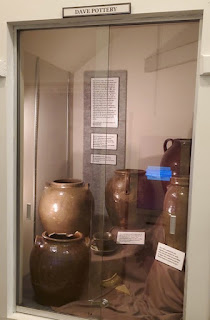
The best orientation to the city is the Aiken County Historical Museum. Until the 1950s this was a playground for the wealthy. When the Winter Colony residents left they the infrastructure intact and the 3-story museum is housed in “Banksia” one of the former mansions. It exhibits items from the history of Aiken County. A museum highlight is pottery by David Drake, an enslaved ceramicist, who often adorned his pottery with poetry. The 3.5-acre museum campus houses two larger artifacts, an 1808 log cabin and 1890s schoolhouse.


Aiken’s Visitors Center and Train Museum showcases railroad history through use of nine town dioramas, model trains, photographs, artifacts and displays. The Visitor Center is located here and maps and brochures are available.


In 1950 the “cold war” took over Aiken in the form of the Savannah River Site designed to make nuclear materials. In 1946 the Atomic Energy Commission was established. In 1949 the USSR tested their first atomic bomb and then moved hydrogen, 1000 times more powerful, bombs. America felt the bomb was an immediate threat and in 1950 chose Dupont as a contractor. They examined 114 US sites for the potential “atomic town”. It had to be near water, out of Russian range, near a larger town, and have certain soil and weather conditions. A site near Aiken was selected November 28, 1950. One week later the people living there were told to move and compensated for their land and homes. 
Construction took place from 1950-55 and once completed the research facility functioned until 1989. The museum tells the story of the plant, the workers, the displaced residents and that of plutonium and its storage and disposal. 


The SC African American Heritage Commission designated Redcliffe Plantation State Historic Site one of the"Top Ten Sites to Visit in South Carolina".  It was named after the red clay on which it sat. The 1859 mansion was slave built for James Henry Hammond senator, governor, cotton planter and staunch defender of slavery. He owned four plantations, 14,000-acres, and approximately 300 slaves with from 20 to 50 working at Redcliffe.


Tours of the 2-story Greek revival mansion are offered and more than 4,000 artifacts are displayed. The 369-acre estate has an 1861 magnolia tree alley and outbuildings that may be visited. Two 1857 extant slave quarters provide a snapshot of the life of the enslaved. There were originally four double-pen cabins.

The self-guided Historic Aiken Tour consists of 94 sites of architectural or historic importance. Each site is marked with a Historic Aiken marker. Sites date from the 1800s. One of the sites is the stunning “Queen of Aiken”, the Willcox Hotel. Originally three structures, the buildings were joined to become the lobby of the hotel. The white pillared Colonial Revival building is listed on the National Register of Historic Places. The rooms are sumptuous and feature deluxe amenities, service and cuisine. Notable guests have included Winston Churchill, the Duke of Windsor and Elizabeth Arden. A stay here is a traveler’s delight. 

Hitchcock Woods is the largest privately owned urban forest in the US. The 2,100-acres are under the management of the Hitchcock Woods Foundation. The points of interest include the 1929 brick Memorial Gate and Sand River that weaves through the center of the woods. Legend has it that an Indian chief was told in a vision to take his ill daughter to be healed to the Sand River. Her cure contributed to the reputation of the area as being a place of healing.   
There is something new to discover in Aiken around every corner and down every street. Become an Aiken adventurer. www.visitaikensc.com


Bliss on the Bay, Galveston, TX


 Galveston, Texas is a 46-mile long, 3-mile wide barrier island in the enviable position of being a destination that offers equal measures of outdoor activities, exceptional architecture, unique dining, entertainment and accommodation options and a nationally significant history. The city boasts 32 miles of gulf beaches and a 17-foot high seawall, 10.3 miles long, the 
longest continuous sidewalk in the country. 


Situated on the main trans-Gulf migration route the island is one of the country’s premier birding destinations.  At East End. Lagoon Nature Preserve birders can see birds in the wetlands and tidal pools from their vehicles. 
Juan de Grijalva first sighted Galveston in 1519 but it was Cabeza de Vaca’s whose party arrived on western Galveston Island, inhabited by the Karankawa, and named it “Malhado” or “Isle of Misfortune” in the 1520s.  De Vaca’s journal is one of the earliest accounts of European contact in Texas. 


In the 1780s Spanish navigator, José de Evia, surveyed the Gulf Coast and named the bay Galvezton for Bernardo de Gálvez the Spanish Viceroy. Americans arrived in 1815 when Henry Perry landed 3 ships, commissioned to disrupt Spanish trade. By 1808 the Atlantic slave trade had been abolished in the US but the trade thrived around the Texas Gulf. The notorious pirate Jean Lafitte entered the trade in the region in 1817 with his base, Campeche, in Galveston. 


There is evidence that Lafitte’s men kidnapped a Karankawa female and this act led to a raid on his compound. The natives were defeated by use of superior weapons. The bulk of Lafitte’s business was in African slavery. He sold to middlemen, most notably Jim Bowie, who purchased them by weight. Lafitte would also claim he “found” them, turn them over to customs and repurchase them at US government sales. This made it legal to sell them in the US. It is estimated he sold approximately 2000 slaves.


The remains of Lafitte’s home, the Maison Rouge or Red House, can still be seen. A captured ship yielded the red paint used on the façade and it is documented to have had 12 gables, 10-ft. arches, a cannon in the cupola and a substantial exterior staircase, the only remaining portion of the house. After firing on an American ship Lafitte was given 60 days to vacate. He left on March 3, 1821 after burning everything to the ground. The remains of the staircase are on Harborside.

The Maison Rouge is one of the most haunted island locations. People claim to have seen lights, apparitions and have heard sounds. The property’s most ghoulish spirits are said to be a pack of 12 black hellhounds supplied by a voodoo priestess. They were trained to hunt and capture men.

The 1911 Hotel Galvez is believed the most haunted site. It has a number of ghosts and has been featured on television. The 9,328-ft.  hotel has 226 rooms and was constructed in a combination Mission and Spanish Revival styles. Once known as the “Vegas of the South,” the hotel played host to presidents and celebrities as well as spirits.


Sister Katherine, a resident spirit, drowned in 1900. She served in an orphanage and when a storm came she and the other Sisters of Charity tied the children to their bodies in hopes of saving them. The nuns and more than 80 children died bound together. It is theorized that she may be buried on the grounds of the hotel.


In 1900 the Great Storm, this was prior to naming storms, was the deadliest natural disaster in our history. The storm killed between 9-12,000 people. The large death toll and diminished population led the people to inter people where they fell, making the island a large burial ground. Many of structures are built on gravesites. Ghost tours are numerous and thematic. 

Downtown Galveston encompasses the longest row of historic buildings and one of the largest concentrations of Victorian architecture in America. The Moody and Bishop’s Mansion, both Texas Historic Landmarks, are open for tours and are outstanding architectural examples. The Bishop’s Palace has been listed as one of the most significant buildings in the US. 

The Texas Heroes Monument is located near Bishop’s Palace. It was gifted by Henry Rosenberg to commemorate those who participated in the 1836 Texas Revolution. Bronze figures adorn the 72-feet tall monument.

Moody Gardens opened in 1986 with the goal of combining education with enduring lessons on conservation and wildlife. There are three pyramids, the Aquarium, the Rainforest and Discovery, showcasing marine animals, plants, animals, reptiles and science exhibits. The complex also includes a water park, zipline, a 3D theater, golf course, paddlewheel boat and hotel. It is one of the premier destinations in the country.

Bay Tours are offered at Pier 22 along with The Texas Seaport Museum and 1877 Tall Ship Elissa. The 2-story museum relates Texas’ maritime history through photographs and documents. More than 133,000 immigrants entered the country through the Port of Galveston and much of their information is computerized and available in the museum. The port was also one of 48 entry ports for the transatlantic slave trade.

In June 19, 1865 Maj. Gen. Granger issued General Order No. 3 calling for “absolute equality” for the enslaved. This act is commemorated and has been celebrated as Juneteenth from that time. The word is not the deed and troops were sent, 75% were black, to assist in enforcing the order for the 250,000 enslaved in the state. A history trail traces their path in Galveston. The showpiece of the trail is the 5,000-sq, ft. “Absolute Equality” mural. The mural depicts a series of scenes of historical significance.


Galveston is a great destination. Find your bliss on the bay.

www.visitgalveston.com

Monday, November 15, 2021

 America’s Christmas City, Bethlehem, PA

Each year, throngs of people travel thousands of miles to spend the holidays in locations that offer great views, attractions, activities, dining, shopping and best of all, an immersion into the true holiday spirit. They can find no better destination than Bethlehem, PA, declared the official “Christmas City USA” in 1937 and is on a tentative list for declaration as a UNESCO site. discoverlehighvalley.com


On April 2, 1741, the Moravian Church, a pre-Reformation religious sect and the world’s oldest organized Protestant religion, received a deed for 500-acres of Pennsylvania land at the juncture of the Lehigh River and Monocacy Creek. On Christmas Eve of the same year they met, in a two-room cabin functioning as a stable and a barn, in thanks and celebration. Count Nicholas Ludwig von Zinzendorf, the colony’s patron visiting from Germany, named the settlement “Bethlehem”. The settlements’ location in the heart of the fertile Lehigh Valley and the industriousness of the Moravian community guaranteed success for more than a century.


Historic Moravian Bethlehem was designated a National Historic Landmark District in 2012, inclusive of 20 historic sites dated 1741-1845. The Moravians were a closed religious community that included blacks and Native Americans. Members worked at more than 35 trades in the self-sufficient community. A self-guided walking tour consists of more than 22 locations. Visitors can experience an old-fashioned holiday with modern elements. Decked out for the holidays, with more than 50 events and immersive activities, you can’t fail to feel the seasonal spirit. www.bethlehempa.org


The north side of the city contains the historic area and numerous Christmas-themed tours are offered. Visitors can take guided tours led by costumed docents, carriage, horse-drawn trolley, walking or custom tours designed for your group. The district is decorated with illuminated Christmas trees and storefronts make great viewing as you stroll along. Along the trail you must stop in the working Blacksmith Shop, the 1740’s Apothecary Museum, the 1746 Moravian Bookstore and the 1806, the oldest continuously operated bookshop in the world and the Central Moravian Church designated one of the Ten Greatest Places to Reflect on Christmas Eve. Special note should be taken of the 6-ft. Moravian star suspended inside the church belfry. 


The Johann Goundie’s Federal-style home built in 1810. It is the oldest brick home in the city. Goundie was a Moravian brewer and a house tour recounts the history of beer brewing in the area. It is filled with fascinating information and artifacts including the fact that ale was sold to wedding guests and the money was given as a gift to the bride, hence “bride ale”, or bridal.


The 1741 Gemeinhaus is home to the Moravian Museum. It was a communal gathering place and housed the Saal, a place for worship. The enormous structure, 94-ft. by 32-ft., remains the nation’s largest log building in continuous use and the oldest building in Bethlehem. A Christmas tour includes examples of the earliest Christmas trees, wooden pyramids with tree boughs attached to them, decorated with candles, apples and Bible verses and holiday Putz scenes. Putz scenes recount the story of the birth of Christ in miniature from the Annunciation to the Flight into Egypt.


Three adjoining houses make up the Kemerer Museum of Decorative Arts. The themed galleries often take the form of room settings. Holiday exhibits feature a series of individually decorated trees. Permanent exhibits include the country’s largest collection of 1830-1930 dollhouses, showcasing 40 houses and more than 5,400 furnishings.


From November 19, 2021 - January 9, 2022 the city will offer the Trees of Historic Bethlehem Tour. The twenty-six trees are adorned with decorations inspired by holiday movies Trees were decorated by the 

Bethlehem Garden Club and are on display in five historic locations.


The Bethlehem By Night Christmas Tour is extremely popular and is the ideal way to see the city. It includes a visit to the iconic Moravian Star set atop South Mountain. The stars were originally used in Moravian classrooms to exemplify geometric principles and later as symbols of the nativity. The first star was a $460 wooden construction. Bethlehem Steel donated a second star. The current LED-lit star is 91-ft. tall, is illuminated nightly and can be seen for 20-miles. www.christmascity.org


Christkindlmarkt Bethlehem® is recognized as one of the top holiday markets in the U.S. The annual market will be open November 19 -December 20th. Artisans and vendors are both indoors and outdoors and the experience is enhanced by performances and scheduled activities. 

Friday, November 5, 2021


Fort Smith, Arkansas Bass Reeves Statue

Fort Smith, Wild, Wild West Arkansas

  • “There is no law west of St. Louis and no God west of Fort Smith.”
No alt text provided for this imagePeople tend to forget that America’s frontier changed over time. The earliest European settlements were along the coast and gradually settlers and explorers, following Indian trails and waterways, moved inland. Early 18th-century events opened the Louisiana Territory and made western Arkansas the frontier, the last stop between “civilization” and Indian Territory and from 1817 until 1897 Fort Smith was the westerly outpost of law and order.

There is no archeological evidence that there were permanent native villages in the area prior to the establishment of Fort Smith in 1817. It was situated at what was known as La Belle Pointe, where the Arkansas and Poteau Rivers met, and named after General Thomas Smith. The log structure was 132-ft. square with 10-ft. walls and was tasked with maintaining peace among the Indian tribes, preventing whites from encroaching on the Indian Territories and keeping Arkansas Territory settlers from harm. The US Army abandoned the first fort in 1824.

Cathay Williams, Buffalo Soldiers NPS.gov

No alt text provided for this image

Urged by white settlers work was begun on a new fort in 1838. The new fort was built of stone and surrounded by an eight-ft. stone wall. Two years later, future US president, Col. Zachery Taylor, took command and in 1845 it became a supply depot. During the Civil War the Confederates held the fort until they abandoned it in August of 1863. Union forces then held it for the remainder of the war. Black regiments were stationed there and it was a base for U S Colored Troop recruitment. 

In March of 1871 the Federal government relocated the Western Arkansas Federal District Court to Fort Smith and installed William Story as the first judge. In March of 1875 President US Grant replaced Story with Judge Isaac Parker and Fort Smith’s most famous era began. Parker presided over the court for the next 21-years dispensing justice to western Arkansas and the Indian Territory. It is documented that he handled an average of two cases daily and throughout his career a total of approximately 12,800 cases. Parker’s 74,000-sq. mile jurisdiction was the province of his deputy marshals, 65 of which were killed during his tenure. At the end of Parker’s era the area was carved into more than 70 separate jurisdictions.

Possibly the most famous of Parker’s federal marshals was a former slave named Bass Reeves. Born in Arkansas in 1838 his owner, William Reeves, moved to Texas when Bass was 8. At the outbreak of the Civil War Bass was forced to accompany his owner’s son George to war as his body servant. Bass took this opportunity to flee to Indian Territory and live among the Creeks and Seminoles and learn their traditions and languages. 

Because of these skills, his ability with a gun, his tenacity and fearlessness, at the age of 38 he was named the third African American marshal and the first west of the Mississippi. He was ambidextrous and was an expert marksman with either hand but with all his abilities he could neither read nor write and after having someone read him the warrants he would memorize them. During his 32-years as a deputy he is credited with arresting 3,000 miscreants and killing 14 in the line of duty. Bass stood 6’2” tall, weighed less than 200-lbs. and arrested blacks and whites alike. Records indicate that in 1882 Bass arrested Belle Starr, the Bandit Queen, once brought in 19 horse thieves at once and in 1902 arrested Benny Bass, his son. Benny had murdered his wife and run away but Bass arrested him and brought him back for trial. He was sentenced to 20-years in Leavenworth.

When Reeves marshaling career ended in 1907 he joined the police force in Muskogee, Oklahoma where he died in 1910. In November of 2011 the bridge over the Arkansas River connecting Muskogee and Fort Gibson was named in honor of Reeves who served longer than any other US Deputy Marshal and captured more criminals. Bass Reeves’ story has been told and retold but the real man rarely receives the credit. The movies using elements of Bass’ life include Hang Em High and The Naked Spur.

On May 26, 2012 Ross Pendergraft Park became the home of a 12-ft. bronze, equestrian, statue, the Bass Reeves Legacy Monument. Reeves, rifle at the ready, is accompanied by his faithful dog. The $300,000 sculpture was created by Harold Holden in Norman, Oklahoma and traveled with an escort of law officers from more than one dozen different agencies, the 168-miles. Reeves’ fame in the area is such that the statue was funded completely by private donations. If you are in the city at just the right time you might encounter Bass in the person of re-enactor Baridi Nokikeli. He brings the man to life in a way that can only occur in Fort Smith. Fort Smith will be the home of the planned U.S. Marshals’ Museum that will honor the contribution of all the marshals. 

 Just as Parker’s marshals were legendary, so too were the criminals they captured and incarcerated at Fort Smith. The worst of the worst fled into Indian Territory because it was so vast and odds of capture appeared slim. The court also had jurisdiction over Arkansans, blacks who were Native American freedmen and the Arkansas-Oklahoma Indian Territory. Although Parker was known as “hanging judge” he was considered fair, was a believer in Indian rights and never attended a hanging.

No alt text provided for this image

 Cherokee Bill was born Crawford Goldsby in 1876 to a Buffalo Soldier and a mixed Cherokee and black mother. Bill’s father abandoned the family but at the age of 10 his mother managed to send him to Pennsylvania’s Carlisle Industrial School for two years. Stories differ but it is generally believed that he shot his first man at age 12 and soon after joined up with the Cook Brothers for a string of robberies and murders. During his brief career he both led his own gang and rode with other notorious felons such as Billy the Kid. 

Bill was betrayed by friends for the $1500 reward, captured and sentenced to death. During his appeal Bill attempted to escape from cell #20 and killed a jail attendant. It was for this murder that he received an additional death sentence and was hung on March 17, 1896. When asked if he had any last words he is quoted as saying, “I came here to die, not to make a speech.”

Rufus Buck Gang. en.wikipedia.com

No alt text provided for this image

Lewis Davis, Sam Sampson, Maoma July, Lucky Davis and Rufus Buck, all Creek Indian and most mixed black, formed an infamous teenaged gang of criminals who robbed and raped both blacks and whites in the territory. Their first murder was that of a US Deputy Marshal on July 28, 1895 and their viciousness was such that marshals, the Creek Indian Lighthorse Police set out to catch them. They were tracked down on August 10, 1895 and only surrendered when they had no more ammunition. Parker sentenced all five to death and they were hanged as a group on July 1, 1896.

No alt text provided for this image

 Fort Smith National Historic Site is a 46-acre complex that includes the 1987 Trail of Tears National Historic Trail Overlook, remains of the first fort, the second fort with four interpreted historic sites and a reconstruction of the Initial Point Marker.

The Initial Point Marker dates from 1858 when a stone was placed to indicate the boundary between Arkansas and Indian Territories. Whites were forbidden to settle west of the line until 1890. The original marker is on display inside the museum.

The Barracks-Courthouse –Jail is the must see site. In 1849 the first barracks burned down and the current one is the second built there. In 1871 the army left the fort and the next year the Western District of Arkansas moved in. Here Parker presided from 1875-1889.

Tours begin in the Visitor Center with a brief orientation film and continue into the basement jail referred to as “Hell on the Border.” The jail is set up as if the prisoners just left and an audio track provides their voices and conversations as if they were ghosts. The upper level of the building features a museum that is walk among jail cells and display cases that feature artifacts, videos, photographs and text. Highlights of the museum are a huge photo of the arrest of Cherokee Bill and items used during his failed escape attempt. Parker’s courtroom is also on the tour as well as displays around the Trail of Tears.

Recreated Gallows. photo by legendsofAmerica.

No alt text provided for this image

A recreated 1886 gallows is located in an enclosure 150-ft. from the courtroom. Six men at a time, making this the largest federal court gallows, could be executed simultaneously. In 1897 the original was burned down. www.nps.gov/fosm

 Outside of the NHP there is much to see in the city and walking tours have been developed. Belle Grove Historic District encompasses 22-sq. blocks of structures built over a 150-year period representing nearly all the forms of architecture used in American construction. The best way see the Downtown area is to follow a trail of 12 historic plaques that, with the use of a free application on your cell phone, gives visitors access to video and full narration.

Miss Laura's Bordello

No alt text provided for this image

Fort Smith never brags, it doesn’t have to. This is historic travel central and everywhere you look it’s a hands-on experience. No other city in the country has a Visitor Center located inside a 1903 bordello owned by Laura Zeigler in the heart of “The Row,” the seven house Red Light District. It was known as the “Queen of the Row,” with nine of the most refined ladies, gambling, dancing, socializing and champagne. Miss Laura’s office was downstairs and gentlemen paid her $3.00 for a token to “spend time” with a lady or $5.00 to spend the entire evening. Laura kept $2.00 and the woman received $1.00. Laura paid $600 for the house and sold it in 1911 for $47,000.

The wooden, baroque Victorian, building is furnished in Victorian elegance complete with stained glass windows. The muted green exterior is its original color. On the second level the rooms of the girls are designated with a a transom over each door inscribed with a name. Throughout the house there are display cases with personal belongings and memorabilia from the era. The house was added to the National Register of Historic Places in 1973. 

John Drennen, from Elizabeth, PA and David Thompson began a company in the Fort Smith area in the early 19th-century. In 1836 they purchased land, established what is now the city of Van Buren and relocated. Drennen began construction of a home in 1836 and the house remained in the family until it became the property of the University of Arkansas at Fort Smith in 2005 making it the oldest home in the state continuously owned by a single family. 

A tour of the 26-acre site begins in the Visitor Center with interpretive panels on Wyatt Earp, Bass Reeves and women’s history. A short walk takes you to the five-story, dogtrot house that began as a basic one-room structure. The house underwent a $5-million restoration and has been returned to its original colors. The furnishings are 100 percent original and include a 1748-64 tall case clock complete with parchment scroll that attests to its provenance. 

The house has strong links to the Revolution and Civil War and the Underground Railroad (UGRR). In 1850 John, his wife and her 14-year-old slave girl stopped at Pittsburgh’s Monongahela Hotel. Some of the free black staff at the hotel were part of the UGRR and with their assistance she escaped. Accounts tell us that she asked that a damaged steamer trunk be repaired. As the luggage was removed from the hotel she slipped out and disappeared, it is believed, to Canada. The incident was big news at the time and the story was printed in a Pittsburgh newspaper and reprinted in Douglass’ “The North Star.” The Drennens’ trunk was returned.